Articles Tagged: MS4 Municipal Separate Storm Sewer System

Stormwater Outfall Data Requirements, What Must Be Recorded and Why It Matters
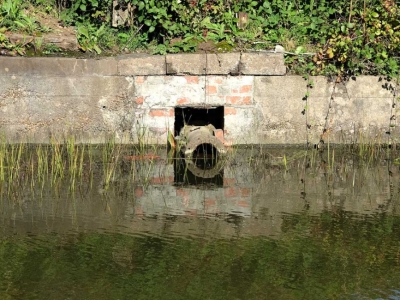
A well managed stormwater program depends on accurate and complete information about every outfall in a community. Outfalls are the final discharge points where stormwater leaves the municipal system and enters a stream, lake, wetland, or other receiving water. Because these locations represent the …continue
What Every MS4 Must Map, and Why It Matters for Waterway Protection
A complete and accurate stormwater map is one of the most important responsibilities for any community that operates as a Municipal Separate Storm Sewer System, or MS4. These maps are not created merely to satisfy a regulatory checkbox. They protect waterways, support field crews, reduce liability, …continue
Free Mapping Tools for Communities with Limited Budgets
Several free or very low cost tools can help communities with limited budgets begin mapping or inventorying their stormwater infrastructure. These tools are not full replacements for a dedicated asset management system, but they can give small towns a head start and help them organize information be…continue
The Fundamentals of Field Inspections for Catch Basins, Culverts, and Outfall.
Field inspections of catch basins, manholes, culverts, and outfalls form the foundation of responsible stormwater management. These routine checks give municipalities an ongoing view of the condition of their drainage network and allow crews to identify issues long before they become flooding hazard…continue
Decoding FEMA’s BRIC Program for Small MS4s
For almost five years the Building Resilient Infrastructure and Communities (BRIC) grant program served as FEMA’s flagship source of hazard-mitigation funding. It directed a steady slice of federal disaster-relief dollars toward projects that would lower future losses, and many small Municipal…continue
Understanding MS4 Expectations for a Complete Stormwater Infrastructure Record
Municipal Separate Storm Sewer System (MS4) permits rest on a simple idea: you cannot manage what you have not first documented. The Environmental Protection Agency (EPA) defines an MS4 as any publicly owned system of drains, pipes, ditches, or similar conveyances that carries runoff to waters of th…continue
Safeguarding Hydric Soils from Stormwater Runoff
Hydric soils, those that form under prolonged saturation and develop anaerobic conditions, are ecological powerhouses. They store carbon, filter pollutants, support wetlands, and buffer floods. Because they are already close to saturation, even modest increases in runoff volume or velocity can trigg…continue
Understanding Stormwater Outfalls: Types and Their Environmental Impact
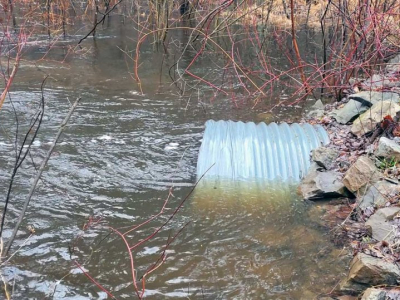
What is a stormwater outfall? A stormwater outfall is the point where a storm-drain system, whether pipes, ditches, or channels, discharges runoff to a receiving water such as a stream, wetland, lake, or the ocean. Regulatory guidance clarifies that simple cross-road culverts, which only pass flow b…continue
Construction Site Runoff Control: Keeping Sediment, Chemicals, and Fines Out of Your Storm Drains
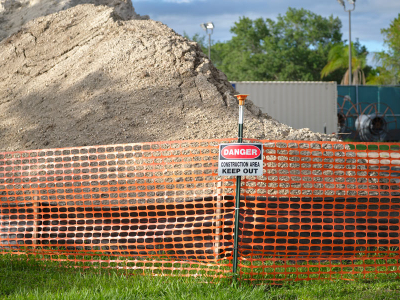
(In the photo above, the silt fence has been improperly installed, as you can see it was placed in loose, already excavated, soil.) Why Construction Runoff Matters A single acre of bare earth can release 10 - 20 times more sediment than the same acre in cropland, and up to 2,000 times more than a fo…continue
Soil & Water Conservation Districts (SWCDs): Your Municipality’s Unsung Stormwater Ally
What exactly is an SWCD? Created under state law in every state and most U.S. territories, nearly 3,000 locally led Soil and Water Conservation Districts now cover almost every county in the nation. Their boards, typically a mix of farmers, municipal officials, and at-large residents, design and del…continue
Gamifying MS4 Refresher Courses to Boost Retention
Why We Need a New Approach Annual (or even quarterly) MS4 refresher courses are mandatory under the NPDES Phase II program, yet completion logs and pop-quiz scores often reveal that municipal crews quickly forget key practices such as spill-response or best management practice (BMP) housekeeping. En…continue
Good, Better, Best: Levels of Documentation That Satisfy Auditors
Why this matters Every MS4 audit, whether it’s a quick screening or a multi-day deep dive, starts with one question: “Show me the records.” Communities that can put the right document on the table (or screen) in seconds walk away with clean reports and lower stress; those that scra…continue