Articles Tagged: Stormwater Control Measures

From Pipes to Plants: How Cities Transition Stormwater Budgets to Nature-Based Solutions

From Pipes to Plants: How Cities Transition Stormwater Budgets to Nature-Based Solutions

For much of the last century, stormwater management followed a simple philosophy: collect runoff as quickly as possible and move it downstream through pipes, ditches, culverts, and channels. Success was often measured by how rapidly water could be removed from streets and developed areas. That appro…

continue
Key Design Elements of a Rain Garden and Why They Matter

Key Design Elements of a Rain Garden and Why They Matter

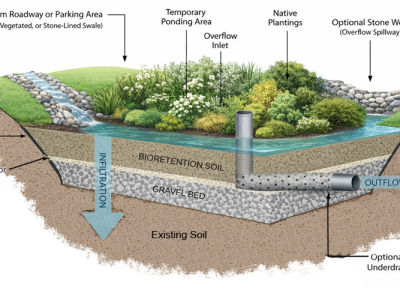
Rain gardens are among the most recognizable and effective forms of green infrastructure. Although they often resemble attractive landscaped planting beds, a properly designed rain garden is a carefully engineered stormwater management system. Every component, from the shape of the basin to the soil…

continue
Why Some Roads Have “Wings”: Rethinking How We Move Stormwater

Why Some Roads Have “Wings”: Rethinking How We Move Stormwater

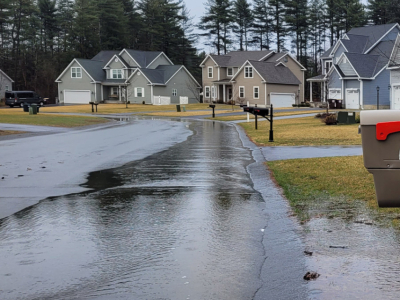
*Author's note: The primary image paired with this article depicts a road with a paved wing - Richmond Hill Drive in Queensbury, NY, to be precise - while flooded during a pre-thaw heavy rain event. A winged road with adequate drainage would not normally retain that amount of stormwater. If you …

continue
What Is a Bioswale and How Does It Work?

What Is a Bioswale and How Does It Work?

As communities look for sustainable ways to manage stormwater, bioswales have become one of the most effective and visually appealing tools in the green infrastructure toolbox. They blend natural processes with engineered design to slow, filter, and infiltrate stormwater before it reaches local wate…

continue
Infiltration BMP Inspections After Major Storms – A 24-Hour Checklist

Infiltration BMP Inspections After Major Storms – A 24-Hour Checklist

Infiltration-based best management practices, or BMPs, are designed to capture, store, and gradually infiltrate stormwater into the ground. These systems, which include bioretention basins, infiltration trenches, dry wells, and porous pavement systems, are particularly vulnerable during and immediat…

continue
Choosing Between a Catch Basin and Pipe System or a Dry Well: Making the Right Call for Stormwater Drainage

Choosing Between a Catch Basin and Pipe System or a Dry Well: Making the Right Call for Stormwater Drainage

When addressing a drainage problem, one of the most important decisions is whether to move water away through a traditional catch basin and pipe system or to manage it on-site using a dry well. Both approaches are widely used and effective when applied in the right context, but selecting the wrong s…

continue
Sediment Build-Up and Its Effects on Water Quality and Habitat

Sediment Build-Up and Its Effects on Water Quality and Habitat

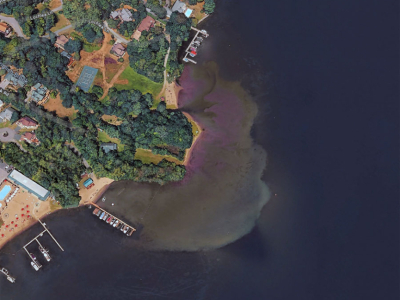
A Look at the English Brook Delta in Lake George, New York Sediment is a natural part of any water system, but when it accumulates faster than a system can handle, it begins to change the waterbody in ways that are both visible and subtle. Excess sediment alters water clarity, transports nutrients, …

continue
Retention vs. Detention Ponds, Understanding the Differences and Why They Matter

Retention vs. Detention Ponds, Understanding the Differences and Why They Matter

Retention and detention ponds are among the most recognizable features of modern stormwater management systems, yet they are often misunderstood or used interchangeably. While both are designed to manage runoff and protect downstream infrastructure, they serve distinct purposes and function in very …

continue
How Housing Density Shapes Stormwater Runoff, Why More Homes Can Mean Less Runoff

How Housing Density Shapes Stormwater Runoff, Why More Homes Can Mean Less Runoff

Housing density is often discussed in terms of zoning, neighborhood character, or affordability, but it has a direct and measurable impact on stormwater runoff. In Using Smart Growth Techniques as Stormwater Best Management Practices, the U.S. Environmental Protection Agency makes a compelling case …

continue
Stop Leaving Money on the Table, How Engineering Firms Can Unlock Funding for Your Infrastructure Projects

Stop Leaving Money on the Table, How Engineering Firms Can Unlock Funding for Your Infrastructure Projects

Municipal leaders and highway departments are under constant pressure to maintain aging infrastructure with limited local budgets. Culverts fail, roads deteriorate, and drainage systems quietly reach the end of their useful life, often without the funding needed to address them. Yet, while many muni…

continue
How to Score and Prioritize Failing Outfalls Before They Fail You

How to Score and Prioritize Failing Outfalls Before They Fail You

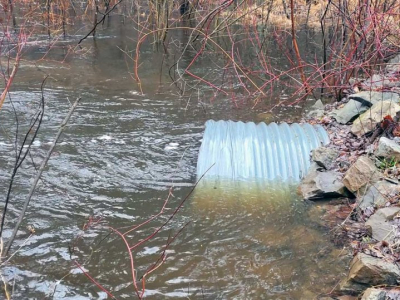
Stormwater outfalls are the final point where a drainage system releases water into a receiving body such as a stream, river, wetland, or lake. Because they sit at the end of the system, they are often overlooked until a visible failure occurs. When an outfall collapses or erodes, the consequences c…

continue
Open Channel Outfalls - Practical Stormwater Treatment for Municipal Systems

Open Channel Outfalls - Practical Stormwater Treatment for Municipal Systems

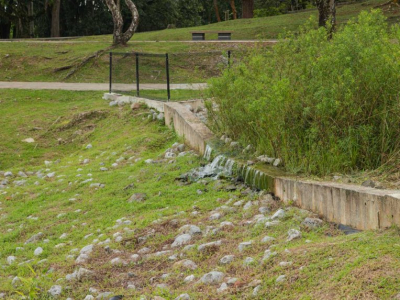
Open channel outfalls occupy a unique space in stormwater infrastructure. They are simple in appearance, often nothing more than a vegetated swale or gently graded channel, yet when properly designed they function as treatment systems, flow control measures, and in northern climates even snow manage…

continue