

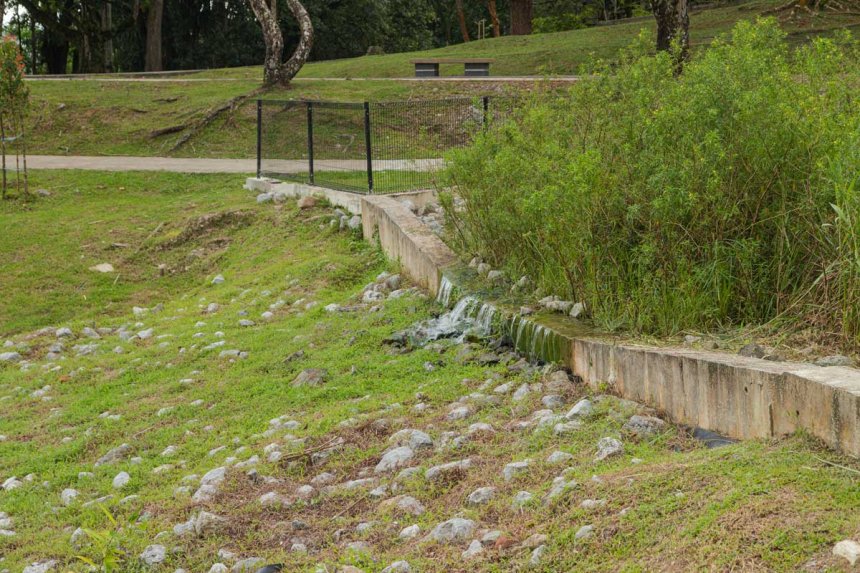
For much of the last century, stormwater management followed a simple philosophy: collect runoff as quickly as possible and move it downstream through pipes, ditches, culverts, and channels. Success was often measured by how rapidly water could be removed from streets and developed areas.
That approach solved many drainage problems, but it also created new ones. Faster runoff increased downstream flooding, stream erosion accelerated, pollutants were delivered directly to waterways, and communities found themselves trapped in an expensive cycle of enlarging storm sewers to keep pace with continued development.
Today, many municipalities are beginning to rethink that strategy. Rather than relying exclusively on larger pipes and detention structures, communities are increasingly investing in green infrastructure and nature-based solutions that manage stormwater closer to where it falls. Rain gardens, bioswales, permeable pavement, urban tree plantings, constructed wetlands, and stormwater parks are becoming important components of modern drainage systems.
The goal is not to replace conventional infrastructure entirely, but to create systems where engineered structures and natural processes work together.
Conventional stormwater systems are extremely effective at moving water. Unfortunately, moving water quickly often means concentrating flows and transferring problems downstream. As impervious surfaces increase, runoff volumes rise while infiltration decreases. Storm sewers that were originally designed decades ago may become undersized as watersheds continue to develop and rainfall patterns become more intense. Expanding these systems is often expensive and disruptive. Upsizing pipes may require road reconstruction, utility relocation, property acquisition, and significant long-term maintenance commitments. In many cases, reducing the amount of runoff entering the pipe network can be more cost-effective than continuing to expand the network itself.
Green infrastructure operates on a different principle. Rather than rapidly conveying stormwater away from developed areas, these systems attempt to slow, spread, store, filter, and infiltrate runoff closer to where it is generated. Rain gardens capture roof and parking lot runoff before it enters storm sewers. Bioswales filter roadway runoff while promoting infiltration. Permeable pavements allow water to pass through surfaces that would otherwise generate runoff. Urban tree canopies intercept rainfall before it reaches the ground, while constructed wetlands provide storage and pollutant removal. Each individual practice may manage only a small volume of water, but when distributed throughout a watershed their cumulative impact can be substantial.
One of the reasons many communities are embracing nature-based solutions is economics. Large storm sewer replacement projects, underground storage facilities, and flood control structures often require major capital investments and decades of maintenance commitments. Green infrastructure projects can frequently be installed incrementally as roads are reconstructed, parking lots are resurfaced, or public spaces are redeveloped. By reducing peak runoff volumes entering the conventional drainage network, green infrastructure may delay or eliminate the need for expensive pipe upgrades and detention projects. Many communities have found that a hybrid approach combining traditional infrastructure with distributed green infrastructure provides the best balance between performance, resilience, and cost.
Unlike conventional stormwater infrastructure, green infrastructure often provides benefits that extend well beyond runoff management. Vegetation helps reduce urban heat island effects by providing shade and cooling through evapotranspiration. Pollutants are filtered before reaching streams and lakes. Wildlife habitat is created within developed areas. Streetscapes become more attractive and pedestrian friendly. Many projects also provide educational opportunities and visible demonstrations of a community's commitment to environmental stewardship and watershed protection. These additional benefits can make green infrastructure projects easier to justify and fund compared to traditional buried infrastructure that remains largely invisible to residents.
Communities that successfully transition toward nature-based solutions typically begin by evaluating where green infrastructure can complement or replace traditional approaches. Road reconstruction projects may include roadside bioswales or permeable shoulders. Parking lot rehabilitation projects may incorporate bioretention areas and tree trenches. Park improvements may include detention features that double as recreational spaces during dry weather. By incorporating green infrastructure into projects that are already planned, municipalities can often achieve significant stormwater benefits with relatively modest additional investment. Rather than asking whether a green solution can replace a pipe, the more useful question is often whether the pipe can be made smaller because green infrastructure is reducing the runoff reaching it.
Nature-based solutions are still infrastructure and require ongoing maintenance to remain effective. Vegetation management, sediment removal, inlet cleaning, and periodic inspections are all essential components of successful green infrastructure programs. Communities transitioning toward these systems must ensure that maintenance budgets, staff training, and operational procedures evolve alongside the infrastructure itself. A rain garden that becomes clogged with sediment or overtaken by invasive vegetation may lose much of its effectiveness over time.
Long-term success depends on treating green infrastructure as a permanent municipal asset rather than a temporary landscaping project.
The future of stormwater management is unlikely to be entirely grey or entirely green. Pipes, culverts, detention basins, and pump stations will continue to play essential roles in protecting communities from flooding. At the same time, green infrastructure is proving that natural processes can shoulder a significant portion of the stormwater burden while providing benefits that conventional infrastructure cannot deliver. Communities that combine engineered systems with nature-based solutions are often finding themselves better prepared for increasing rainfall intensity, aging infrastructure, and growing regulatory expectations.
The transition from pipes to plants is not about abandoning traditional engineering. It is about expanding the stormwater toolbox and using every available tool to build more resilient, efficient, and sustainable drainage systems.