

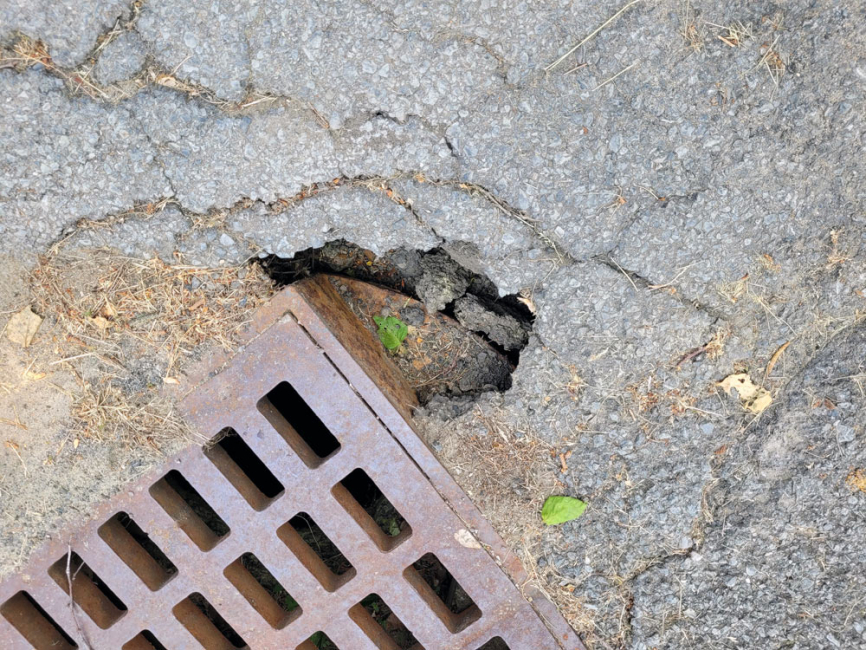
Stormwater drainage systems are among the most critical yet overlooked components of rural infrastructure. Hidden beneath roads, driveways, fields, and stream crossings, culverts and drainage pipes quietly transport runoff away from roadways and developed areas. Many rural drainage systems were installed decades ago, often with limited documentation and varying construction standards. As these systems age, they become increasingly susceptible to failure. Understanding the most common points of failure can help municipalities, highway departments, conservation districts, and property owners identify problems before they become costly emergencies.
One of the most common failures in older drainage systems is the separation of pipe joints. This issue is particularly prevalent in systems constructed from concrete, clay, corrugated metal pipe (CMP), or older plastic materials. Over time, soil settlement, frost heaving, traffic loading, erosion, and ground movement can cause individual pipe sections to shift. As pipes move, joints may pull apart, creating gaps that allow soil to enter the drainage system or water to escape into the surrounding soil.
Separated joints can lead to:
In severe cases, enough soil may wash into the pipe to cause roadway collapse.
Cross culverts carry water beneath roads and are among the most important components of rural drainage infrastructure. Because they are hidden beneath roadways, their deterioration often goes unnoticed until a significant failure occurs.
Common causes of cross culvert failure include:
A partially collapsed culvert may continue functioning for years while gradually restricting flow. During a major storm event, the reduced capacity can cause roadway flooding, washouts, or complete culvert failure. Warning signs often include roadway depressions, pavement cracking, recurring potholes, or sinkholes forming above the culvert alignment.
Corrugated metal pipe has been widely used in rural drainage systems for more than a century. While durable, metal pipes are vulnerable to corrosion. Corrosion can occur both inside and outside the pipe.
Internal corrosion is often caused by:
External corrosion may result from:
As corrosion progresses, the pipe walls thin and eventually develop holes or structural failures. The invert, or bottom portion of the pipe, is often the first area to deteriorate because it remains wet for extended periods.
Tree and shrub roots naturally seek water and oxygen. Small openings in pipe joints, cracks, or deteriorated mortar joints provide ideal entry points. Once roots enter a drainage system, they continue growing and expanding. Over time, root masses can:
Root intrusion is especially common in older concrete, clay, and masonry drainage systems. Many drainage problems attributed to sediment accumulation are actually caused by root growth slowing water velocities and creating conditions that encourage sediment deposition.
Older culverts, headwalls, catch basins, and masonry structures frequently relied on mortar to seal joints.
Mortar naturally deteriorates over time due to:
As mortar erodes, joints become vulnerable to water infiltration and soil migration. Small leaks can gradually enlarge into significant voids around the structure. Missing mortar also creates opportunities for root intrusion and accelerates the deterioration of adjacent materials.
Soil piping occurs when flowing water gradually removes soil particles from around a drainage structure.
This process often begins through:
As water carries soil away, underground voids form. These voids may remain hidden for years before suddenly collapsing.
Signs of soil piping may include:
Soil piping is one of the leading causes of unexpected roadway failures.
Many drainage systems fail not because the pipe itself deteriorates, but because erosion undermines the pipe ends. At outlets, high-velocity discharge can scour streambanks and embankments. At inlets, concentrated runoff may erode soil around the entrance structure.
Over time, erosion can:
Proper energy dissipation and erosion control measures are essential for long-term system performance.
Sediment is a natural byproduct of watershed erosion. As runoff enters drainage systems, soil particles settle inside pipes, ditches, and culverts. Sediment accumulation can significantly reduce hydraulic capacity.
Contributing factors include:
Even a modest reduction in pipe diameter can substantially decrease flow capacity during major storm events.
Leaves, branches, woody debris, trash, and beaver activity frequently obstruct rural drainage systems.
Blockages often occur at:
A partially blocked culvert may perform adequately during normal conditions but fail catastrophically during a large storm. Regular inspection is critical for identifying developing blockages before they create flooding problems.
Infiltration occurs when groundwater enters a drainage pipe through cracks or defective joints. Exfiltration occurs when water escapes from the pipe into surrounding soils. Both conditions can create problems. Infiltration may overwhelm drainage systems with unintended flows, while exfiltration can wash away supporting soils and weaken the surrounding roadway structure.
Cold-climate regions face unique challenges associated with freeze-thaw cycles. Water trapped around pipes and structures expands when frozen, exerting tremendous pressure on surrounding materials.
Repeated freezing and thawing can:
Northern rural communities often experience cumulative damage from decades of freeze-thaw cycles.
Headwalls and end sections protect culvert entrances and exits from erosion and structural damage.
Common problems include:
Failure of these structures can expose pipe ends, accelerate erosion, and shorten the life of the entire drainage installation.
Many rural communities possess drainage systems that were installed generations ago. Records may be incomplete or entirely absent. Institutional knowledge often disappears when experienced employees retire.
As a result, municipalities may not know:
Unknown infrastructure presents significant challenges when planning maintenance and capital improvements.
Many drainage failures develop gradually over decades. Unfortunately, municipalities often discover problems only after flooding, sinkholes, or roadway damage occur. A drainage asset management system can help communities maintain a complete inventory of culverts, pipes, catch basins, manholes, and other stormwater infrastructure. By recording installation dates, locations, inspection results, photographs, maintenance activities, and condition assessments, municipalities can identify deteriorating assets before failure occurs. Asset management also preserves institutional knowledge. Information that might once have existed only in the memory of a retired employee becomes permanently documented and accessible to future staff. This allows communities to prioritize repairs, budget for replacements, and reduce the likelihood of costly emergency failures.
Rural stormwater drainage systems face numerous threats throughout their service lives. Joint separation, culvert collapse, corrosion, root intrusion, mortar deterioration, sediment accumulation, erosion, and frost damage are among the most common causes of failure. Because many of these problems develop slowly and remain hidden underground, regular inspection and proactive maintenance are essential. Communities that understand these common failure mechanisms and maintain accurate drainage asset records are far better positioned to prevent roadway damage, reduce flooding risks, and extend the service life of critical stormwater infrastructure.