

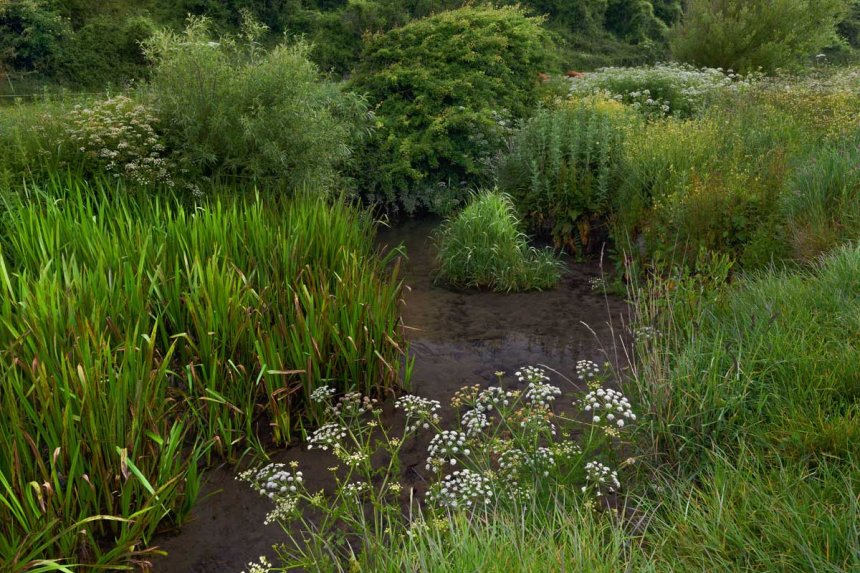
Rain gardens are among the most recognizable and effective forms of green infrastructure. Although they often resemble attractive landscaped planting beds, a properly designed rain garden is a carefully engineered stormwater management system. Every component, from the shape of the basin to the soil beneath the plants, plays a specific role in slowing runoff, filtering pollutants, promoting infiltration, and protecting downstream waterways. When all of these design elements work together, a rain garden can significantly reduce stormwater runoff while improving water quality, reducing erosion, supporting wildlife, and enhancing the beauty of a neighborhood.
Every rain garden begins with a carefully selected drainage area. This is the impervious surface that contributes runoff to the garden, such as a roof, driveway, sidewalk, parking lot, or section of roadway. Understanding the size of the drainage area allows engineers or designers to properly size the rain garden so it can capture and manage the expected runoff volume from a typical rainfall event. An undersized rain garden may overflow too frequently, while an oversized system can occupy unnecessary space and increase construction costs. Proper sizing is one of the most important factors affecting long-term performance.
The ponding area is the shallow depression that temporarily stores stormwater after a rain event. Unlike a permanent pond, this water is intended to infiltrate into the soil within 24 to 48 hours. Temporary ponding serves several important purposes. It slows runoff before it reaches storm drains or nearby streams, reduces peak discharge during storms, allows suspended sediment to settle, and provides additional time for pollutants to be removed through biological and physical processes. Most residential rain gardens are designed with ponding depths between 4 and 12 inches, although larger municipal installations may be deeper depending on site conditions.
Rain gardens are typically constructed with gradual side slopes rather than steep banks. Gentle slopes improve safety, reduce erosion, make maintenance easier, and allow stormwater to spread evenly across the garden instead of concentrating into narrow channels. They also create a more attractive landscape feature that blends naturally into surrounding lawns or planting areas. In addition, gradual transitions between wet and dry areas support a wider variety of plant species and wildlife.
Perhaps the most critical component of any rain garden is the engineered soil beneath the surface. Unlike ordinary garden soil or compacted fill, rain garden soil is specifically blended to promote infiltration while supporting healthy plant growth. Typical soil mixes contain varying proportions of sand, topsoil, and compost. The engineered soil performs several important functions. It allows water to infiltrate rapidly, filters sediment and pollutants, stores moisture for plants between storms, supports beneficial microorganisms, and provides adequate oxygen to plant roots. Proper soil composition helps prevent standing water while maximizing pollutant removal.
A layer of shredded hardwood mulch is commonly placed on top of the engineered soil. Mulch protects the soil surface from erosion during heavy rainfall while helping conserve moisture during dry periods. It also suppresses weeds, moderates soil temperature, and gradually decomposes to improve soil organic matter. As stormwater passes through the mulch, additional pollutants are filtered before reaching the underlying soil. Fresh mulch should generally be replenished as needed to maintain effective coverage.
Plants are far more than decorative features in a rain garden. They are essential components of the treatment system. Native grasses, sedges, wildflowers, shrubs, and small trees have deep root systems that improve soil structure, increase infiltration, stabilize the soil, and absorb nutrients from stormwater. Their extensive roots also create pathways through the soil that allow water to move more efficiently underground. Native plants are generally preferred because they are adapted to local climate conditions and require less irrigation, fertilizer, and maintenance once established. They also support pollinators, birds, and other wildlife while improving biodiversity.
Successful rain gardens often include a diverse mix of species that tolerate both wet conditions immediately after storms and dry periods between rainfall events.
Stormwater must enter the rain garden in a controlled manner. Depending on the site, runoff may enter through a curb cut, downspout extension, vegetated swale, pipe outlet, or stone-lined channel. A properly designed inflow prevents erosion at the entrance while distributing water evenly across the rain garden. Many installations include rock aprons or splash pads that dissipate the energy of incoming water before it reaches the planting area. Without proper inflow protection, concentrated runoff can quickly erode soils and reduce system performance.
Rain gardens are designed to manage most rainfall events, but exceptionally large storms require a safe overflow path. Overflow structures may include raised outlet pipes, spillways, curb openings, or stabilized overflow channels that safely direct excess water to an existing storm drainage system or adjacent drainage feature. This prevents erosion, protects nearby property, and ensures the rain garden continues functioning during major storm events.
Ideally, rain gardens allow water to infiltrate naturally into the underlying soil. However, some sites contain clay soils, shallow bedrock, or high groundwater that limit infiltration. In these situations, designers may install a perforated underdrain beneath the engineered soil. The underdrain collects excess water after filtration and slowly conveys it to the storm sewer system. Although underdrains reduce groundwater recharge, they still provide substantial water quality improvements by filtering runoff before discharge.
Municipal rain gardens that receive runoff from roadways or parking lots often include pretreatment measures to capture coarse sediment before it enters the main planting area. Pretreatment may consist of sediment forebays, grass filter strips, stone diaphragms, or small settling basins. By removing large sediment particles and debris before water enters the rain garden, pretreatment reduces maintenance needs and extends the life of the system.
One of the least visible but most important components of a rain garden is its living soil ecosystem. Beneficial bacteria, fungi, earthworms, insects, and other microorganisms break down hydrocarbons, cycle nutrients, improve soil structure, and support healthy vegetation. These biological processes play a major role in removing pollutants that cannot simply be filtered mechanically. Healthy soils are one of the reasons rain gardens often become more effective as they mature.
A successful rain garden contains more than one or two ornamental species. Designers often incorporate plants of varying heights, bloom times, rooting depths, and moisture tolerances. This diversity creates a more resilient planting that can better withstand drought, flooding, pests, and disease. Plant diversity also increases habitat value for birds, butterflies, native bees, and other beneficial insects.
Each component of a rain garden serves a specific purpose, but together they create a highly effective stormwater treatment system. The ponding area temporarily stores runoff, engineered soils and vegetation filter pollutants, plant roots promote infiltration, soil microorganisms break down contaminants, and overflow structures safely handle large storms. The result is reduced runoff volume, lower peak flows, improved groundwater recharge, decreased streambank erosion, cleaner receiving waters, and healthier aquatic ecosystems.
Rain gardens also provide significant secondary benefits, including reduced urban heat island effects, increased biodiversity, carbon sequestration, improved neighborhood aesthetics, and enhanced community resilience.
Rain gardens demonstrate how thoughtful design can transform a relatively small landscape feature into powerful stormwater infrastructure. While a single rain garden may only manage runoff from one building or parking area, widespread installation throughout a watershed can dramatically reduce the burden on storm sewer systems while improving water quality and restoring more natural hydrologic processes.
As communities continue to embrace sustainable stormwater management, rain gardens remain one of the most practical, attractive, and cost-effective green infrastructure practices available.