

Protecting your community’s waterways starts with knowing what doesn’t belong.
Illicit discharges are one of the most persistent threats to stormwater systems and local water quality. These unauthorized flows, often containing pollutants like oils, detergents, sewage, or industrial waste, can enter the municipal separate storm sewer system (MS4) through direct connections, spills, or illegal dumping. Recognizing the signs of these discharges is essential for compliance, environmental protection, and public health.
According to the EPA, an illicit discharge is any discharge to the stormwater system that is not composed entirely of stormwater, unless it’s specifically authorized (like firefighting activities or landscape irrigation). These discharges often occur without warning and may not be obvious unless you’re trained to look for them.
Unusual Flow During Dry Weather
If water is flowing from a pipe or outfall during dry weather, it could be a sign of an illegal connection or ongoing discharge. Investigate any consistent baseflow when there's been no rain.
Staining or Discoloration
Look for reddish, greenish, milky, or oily residue around storm drains or outfalls. Dark streaks on curbs, catch basins, or culverts can indicate previous contamination.
Strong or Unusual Odors
A pungent smell of sewage, oil, solvents, or chemicals near storm drains can indicate an illicit discharge. Trust your nose. Many pollutants carry a distinct scent.
Floating Solids or Suds
Soap suds, foamy residues, or floating debris in water discharged from storm systems is a warning sign, particularly if it’s not raining.
Vegetation Stress
Brown, dead, or dying grass or plants around stormwater outfalls or drainage ditches may indicate contamination from pollutants like fuel, solvents, or high-salinity water.
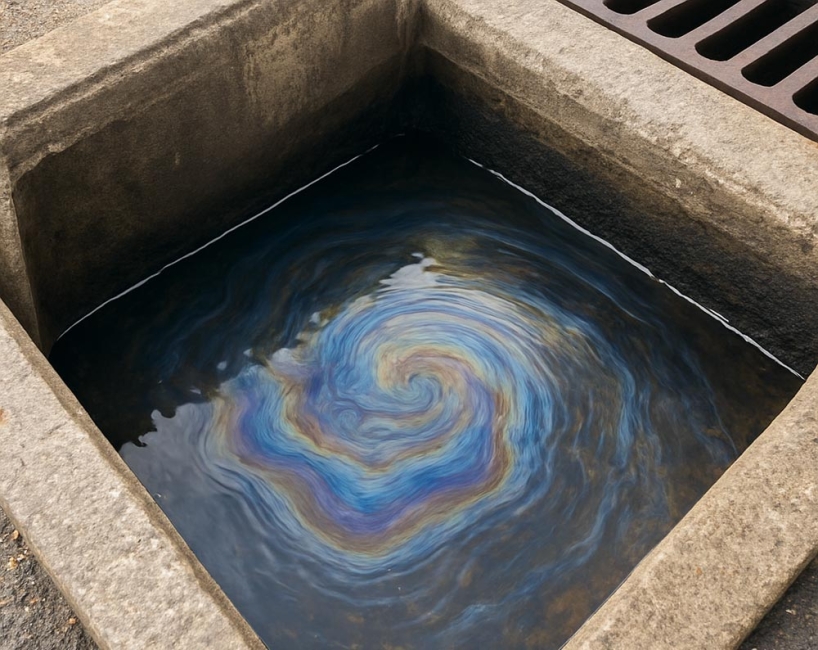
Oil Sheens or Rainbow Films
A rainbow-colored sheen on the water can indicate petroleum contamination. Swirl the surface with a stick. If it breaks up and doesn't regroup, it’s likely petroleum-based.
Unlabeled or Mysterious Pipes
Any pipe discharging to a storm drain system without clear labeling or documentation should be treated as suspicious.
Cross-connections from sanitary sewer lines
Floor drains in auto shops or commercial buildings
Illegal dumping of paint, oil, or washwater
Improperly plumbed septic tanks
Leaking dumpsters or outdoor storage areas
Document the Evidence
Take note of the time, location, weather, and observations. Photos or videos are invaluable.
Report It Promptly
Notify your local MS4 coordinator or stormwater compliance officer. If you’re a municipal worker, follow internal reporting protocols.
Avoid Direct Contact
Many illicit discharges contain harmful substances. Don’t touch or sample without proper safety gear and training.
Trace the Source
Use dye testing, smoke testing, or CCTV inspection to help trace the flow upstream—especially if the discharge is intermittent or difficult to locate.
Many illicit discharges go unnoticed simply because no one is looking. Training field staff to recognize the signs and encouraging residents to report suspicious flows can make a significant difference. Whether you're a highway department, public works agency, or stormwater district, implementing an inspection schedule and investing in basic field monitoring can save your community from costly cleanups and environmental damage.