

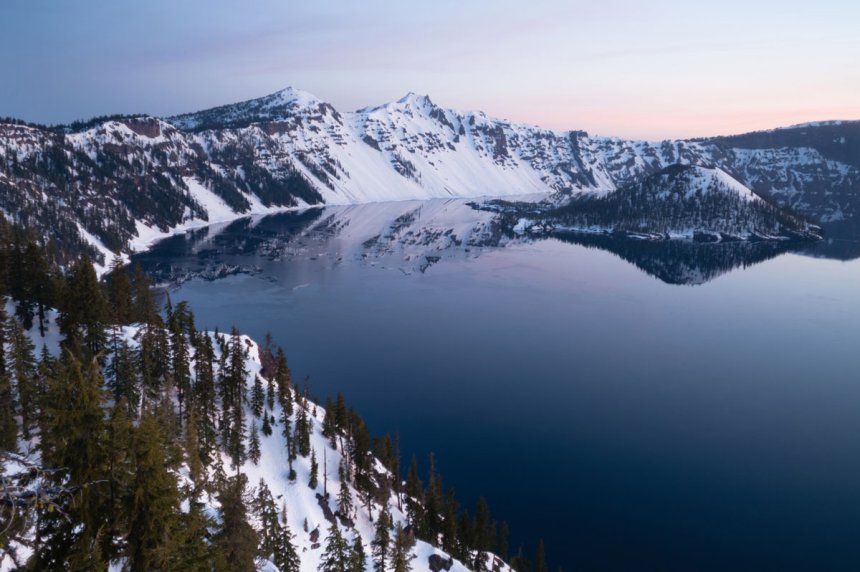
Few lakes in the world inspire the sense of awe that Crater Lake does. Formed nearly 7,700 years ago after the collapse of Mount Mazama, the lake fills a massive volcanic caldera and reaches a depth of 1,943 feet, making it the deepest lake in the United States. Its remarkable blue color and extraordinary water clarity have made it one of the country's most recognizable national parks.
While millions of photographs capture Crater Lake's stunning beauty, far fewer people appreciate the behind-the-scenes work required to protect such an exceptionally fragile watershed. For stormwater professionals, park managers, and environmental planners, Crater Lake represents an outstanding example of why careful watershed management, erosion control, and visitor impact reduction are essential to preserving water quality.
Unlike many lakes, Crater Lake has no rivers flowing into or out of it. Instead, nearly all of its water comes from snowfall and rainfall. Water leaves the lake primarily through evaporation and slow groundwater seepage.
Because the lake exists within this nearly closed hydrologic system, pollutants that enter the watershed have very limited opportunities to leave. Sediment, nutrients, petroleum products, trash, and other contaminants can remain in the system for extended periods, making prevention far more effective than cleanup.
This unique hydrology is one reason Crater Lake is internationally recognized for its exceptional water clarity.
Crater Lake National Park welcomes hundreds of thousands of visitors each year. Although visitation fluctuates due to wildfire activity, road closures, weather, and seasonal operations, concentrated use places significant pressure on portions of the park.
The greatest impacts typically occur around Rim Village, scenic overlooks, parking areas, and the Cleetwood Cove Trail, which provides the only legal access to the lake's shoreline.
Heavy foot traffic can create a surprising number of stormwater-related problems, including:
Volcanic pumice soils are particularly vulnerable. Once vegetation is disturbed, erosion can continue for years, especially on the steep slopes surrounding the caldera.
Crater Lake is protected by some of the highest water quality standards available. The lake and surrounding wetlands have been designated as an Outstanding Resource Water by Oregon, recognizing their exceptional ecological and water quality value. This designation reflects the importance of maintaining the lake's extraordinary clarity and minimizing any human-caused degradation.
For park managers, this means every infrastructure project, trail improvement, parking area upgrade, or drainage modification must be designed with water quality protection as a primary objective.
Stormwater management in a national park differs significantly from municipal stormwater systems. Rather than collecting runoff and moving it away as quickly as possible, park engineers typically focus on minimizing disturbance while allowing rainfall and snowmelt to behave as naturally as possible.
Projects often emphasize:
This philosophy aligns closely with many principles of green infrastructure and low impact development, although the specific techniques must account for Crater Lake's volcanic geology, steep terrain, and heavy winter snowfall.
Protecting Crater Lake requires continuous investment in aging infrastructure. Several major rehabilitation projects have focused on improving both visitor safety and environmental protection. These efforts include rebuilding sections of the Cleetwood Cove Trail, repairing retaining walls, improving drainage systems, rehabilitating portions of Rim Drive, restoring damaged landscapes, and closing unauthorized trails that contribute to erosion. Many of these projects also reduce sediment transport during heavy rain and spring snowmelt, helping preserve the lake's exceptional water quality.
Infrastructure improvements alone cannot eliminate visitor impacts. Effective management also requires thoughtful planning that directs people away from sensitive areas while maintaining access to the park's spectacular scenery. Many national parks have successfully adopted strategies that could continue to benefit Crater Lake, including timed-entry reservations during peak visitation periods, expanded shuttle transportation, improved trail design, enhanced wayfinding, and restoration of disturbed landscapes.
Modern technologies such as automated trail counters, parking occupancy monitoring, and visitor flow analysis can also help managers identify congestion before it results in environmental damage. The objective is not simply to reduce visitation, but to distribute it more effectively while protecting the park's most vulnerable resources.
Individual visitors play an important role in protecting Crater Lake. Remaining on designated trails prevents unnecessary erosion and protects fragile vegetation. Parking only in designated areas reduces damage to roadside habitats. Properly disposing of waste helps prevent wildlife conflicts and keeps pollutants out of the watershed. Respecting seasonal closures allows restoration projects to succeed while reducing safety risks. Small actions by hundreds of thousands of visitors collectively make an enormous difference in preserving the park.
Crater Lake demonstrates that protecting exceptional water resources requires far more than preserving scenic views. It demands careful planning, sound engineering, ongoing maintenance, effective visitor education, and long-term stewardship of the entire watershed.
For stormwater professionals, Crater Lake serves as a reminder that water quality protection begins long before runoff reaches a stream, wetland, or lake. Preventing erosion, minimizing disturbed soils, managing visitor impacts, and designing resilient infrastructure all contribute to preserving one of America's most extraordinary natural resources. As visitation continues and infrastructure ages, the lessons learned at Crater Lake will remain valuable not only for national parks but also for municipalities, watershed organizations, and anyone responsible for protecting clean water for future generations.