

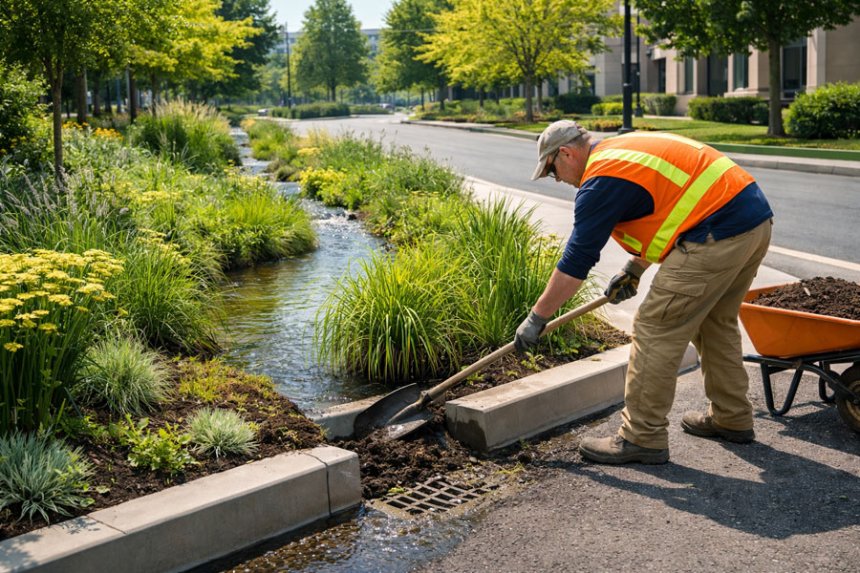
Bioswales have become an increasingly common component of modern stormwater management systems. Found along roadways, in parking lots, within subdivisions, and around commercial developments, these vegetated channels are designed to slow runoff, capture sediment and pollutants, promote infiltration, and reduce the burden placed on conventional storm sewer systems. When functioning properly, bioswales can improve water quality, reduce localized flooding, and help communities meet stormwater permit requirements.
Like any piece of infrastructure, however, bioswales require regular maintenance to continue performing as intended. A neglected bioswale can quickly lose infiltration capacity, become clogged with sediment, develop erosion problems, or turn into little more than an overgrown ditch. For municipalities, property owners, and stormwater managers, maintenance is not an optional expense, it is an essential part of asset management.
Effective maintenance begins with understanding how a bioswale is intended to function. Stormwater should enter through curb openings, pipe outlets, or sheet flow, spread evenly throughout the treatment area, infiltrate through engineered soils and vegetation, and discharge only during larger storm events when design capacity is exceeded. When flow becomes concentrated, vegetation dies, or sediment accumulates excessively, that treatment process begins to fail.
Sediment management is often the single most important maintenance activity. Bioswales are specifically designed to capture sediment and debris carried by stormwater runoff. Over time, however, these materials accumulate and reduce available storage volume while clogging soil pores that are critical for infiltration. Inlets, forebays, low points, and curb cuts should be inspected regularly, particularly after heavy rainfall events or spring snowmelt periods. Sediment should be removed before it becomes compacted or vegetated, as early intervention is far less expensive than full rehabilitation or soil replacement.
Vegetation maintenance is equally critical to long-term performance. Bioswales are engineered treatment systems that rely on healthy plant communities to stabilize soils, promote infiltration, and remove pollutants through biological processes. Bare areas should be reseeded or replanted promptly to prevent erosion and maintain treatment capacity. Plant species should be selected based on local climate conditions and the expected range of wet and dry periods experienced by the site.
Invasive species and woody vegetation also require attention. While some shrubs may be included in bioswale designs, volunteer trees and aggressive invasive plants can obstruct flow paths, damage infrastructure, and reduce hydraulic performance. Periodic mowing, trimming, and selective removal help preserve both the appearance and functionality of the system while maintaining visibility for motorists and maintenance personnel.
Routine inspections provide the foundation for successful maintenance programs. At a minimum, bioswales should be inspected seasonally and after significant storm events. Inspectors should look for sediment accumulation, standing water that persists beyond expected drawdown times, erosion, damaged inlets or outlets, unhealthy vegetation, scour channels, and evidence that runoff is bypassing the facility entirely.
Persistent standing water deserves particular attention. While bioswales are expected to temporarily pond water during and immediately after storms, water that remains for several days may indicate clogged soils, excessive sediment accumulation, groundwater interactions, or construction deficiencies. Left unresolved, these issues can reduce pollutant removal effectiveness and create nuisance conditions.
Winter operations can also have a significant impact on bioswale performance in northern climates. Road sand applied during snow and ice control operations often accumulates within roadside bioswales and can substantially reduce infiltration capacity over time. Similarly, repeated applications of deicing salts may affect soil chemistry and plant health. Municipalities that utilize bioswales extensively should consider incorporating spring sediment removal and vegetation assessments into their annual maintenance schedules.
Activities occurring upstream of the bioswale can dramatically influence maintenance requirements. Construction projects, unstabilized soils, failing driveways, and poorly managed landscaping can all increase sediment loading and shorten the lifespan of the facility. Practices such as street sweeping, stabilized construction entrances, and erosion control measures can significantly reduce maintenance costs while improving long-term performance.
Documentation is another often overlooked component of bioswale management. Recording inspection dates, maintenance activities, sediment removal quantities, vegetation replacement efforts, and observed deficiencies creates valuable historical records that support budgeting, regulatory compliance, and long-term planning. Communities operating under stormwater permit requirements may also need these records to demonstrate ongoing maintenance of stormwater treatment practices.
Ultimately, bioswales should be managed with the same attention given to culverts, catch basins, storm sewers, and detention ponds. Although they may appear natural, bioswales are engineered infrastructure assets with specific performance objectives. When inspected regularly and maintained consistently, they can continue delivering water quality improvements and drainage benefits for decades. When ignored, they often fail gradually and quietly until the symptoms emerge as flooding, erosion, poor water quality, or costly rehabilitation projects.
Keeping green infrastructure working rarely requires complicated solutions. More often, success comes from routine inspections, timely maintenance, and a commitment to preserving the original design intent of the system.