

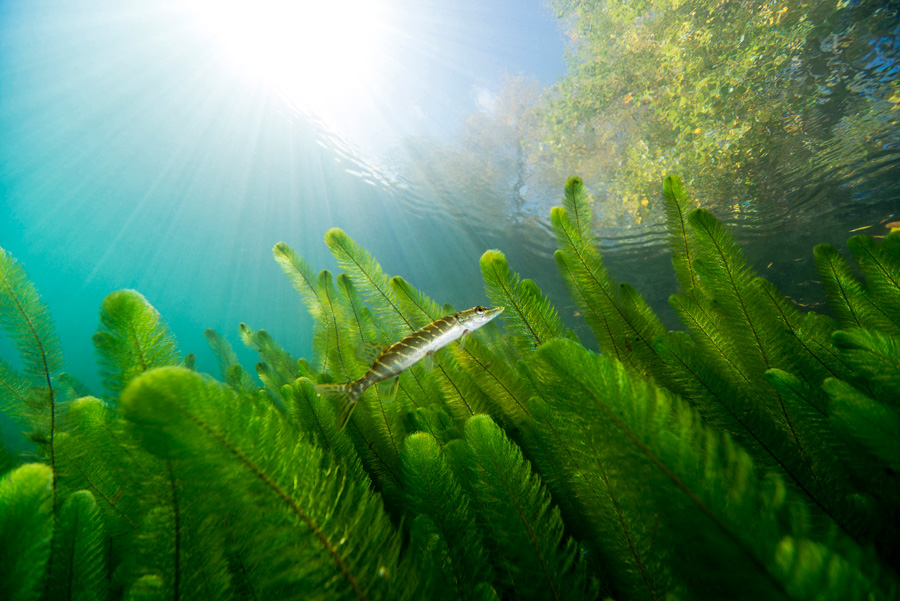
Eurasian watermilfoil is one of the most widespread and problematic aquatic invasive plants in North America. Known scientifically as Myriophyllum spicatum, this submerged aquatic plant has spread aggressively across lakes, ponds, rivers, reservoirs, and canals throughout much of the United States and Canada. It is capable of transforming entire aquatic ecosystems, interfering with recreation, reducing biodiversity, altering water quality, and creating expensive long-term management challenges for municipalities, lake associations, conservation districts, and state agencies.
Although Eurasian watermilfoil may appear harmless at first glance, its ability to spread rapidly and dominate waterways has made it one of the most intensively managed aquatic invasive species on the continent.
Eurasian watermilfoil is a rooted submerged aquatic plant that grows underwater while extending flowering stems above the water surface. The plant has long slender stems and feather-like leaves arranged in whorls around the stem. Mature plants often form thick underwater canopies and floating mats near the water surface. The leaves are finely divided into numerous thread-like segments, giving the plant a soft feathery appearance. Dense stands may grow several feet tall and can completely fill the water column in shallow lakes and ponds. The plant reproduces both by seeds and vegetative fragmentation, although fragmentation is by far the most important method of spread in North America. Small stem fragments broken off by boat propellers, wave action, harvesting equipment, or natural disturbances can drift away, settle elsewhere, and quickly establish entirely new colonies. This ability to reproduce from tiny fragments is one of the primary reasons Eurasian watermilfoil spreads so efficiently.
As its name suggests, Eurasian watermilfoil is native to parts of Europe, Asia, and northern Africa. In its native range, the plant exists as part of balanced aquatic ecosystems where native herbivores, pathogens, competitors, and environmental conditions help regulate its growth. In those environments, Eurasian watermilfoil typically does not dominate waterways to the same extent seen in North America. The ecological checks and balances that evolved alongside the species help prevent uncontrolled expansion. When introduced into new environments without those natural controls, however, the plant can become highly invasive.
Eurasian watermilfoil was likely introduced into North America during the 1940s through the aquarium and ornamental water garden trade. Aquatic plants were commonly imported for decorative ponds and aquariums, and some were intentionally or accidentally released into natural waterways. Once established, the plant spread rapidly through interconnected waterways and human activity. Boats, trailers, fishing gear, anchors, propellers, and other recreational equipment became major vectors for transporting plant fragments from one lake to another. Because even a small fragment can start a new infestation, Eurasian watermilfoil was able to spread quickly throughout heavily used recreational waterbodies. Flooding and water currents also contributed to the spread by transporting fragments downstream into connected lakes, rivers, and wetlands.
Today, Eurasian watermilfoil is found throughout much of the United States and southern Canada. It is especially common in the Northeast, Midwest, Pacific Northwest, Mid-Atlantic region, and portions of the South. The plant is now established in thousands of lakes and waterways, including many popular recreational destinations. It is particularly widespread in states such as New York, Vermont, Michigan, Wisconsin, Minnesota, Washington, and California. In some regions, it has become one of the dominant submerged aquatic plants in freshwater ecosystems.
Eurasian watermilfoil thrives in slow-moving or still freshwater systems, including:
It grows best in nutrient-rich waters with abundant sunlight, although it can tolerate a wide range of environmental conditions.
Several biological traits make Eurasian watermilfoil especially aggressive and difficult to control.
The plant grows quickly during the warm season and can begin growing earlier in spring than many native aquatic plants. This allows it to establish dominance before native vegetation fully develops.
Unlike many aquatic plants that rely heavily on seeds, Eurasian watermilfoil spreads extremely efficiently through stem fragments. Mechanical disturbance often accelerates its spread instead of controlling it.
The plant forms thick canopies near the water surface that block sunlight from reaching native vegetation below.
Eurasian watermilfoil tolerates a broad range of temperatures, nutrient conditions, and water chemistries.
North American ecosystems generally lack the specialized herbivores and diseases that help control the plant in its native range.
Eurasian watermilfoil can create major ecological, recreational, economic, and operational problems.
Dense Eurasian watermilfoil stands often outcompete native submerged vegetation for light, space, and nutrients. Over time, native plant diversity may decline substantially. Reduced biodiversity can destabilize aquatic ecosystems and negatively affect fish, amphibians, aquatic insects, and waterfowl.
Although some fish may temporarily use dense vegetation for cover, excessive plant growth can ultimately degrade fish habitat quality. Thick plant beds may reduce open water areas, alter predator-prey relationships, and interfere with spawning habitat.
As dense plant masses die and decompose, microbial decomposition consumes dissolved oxygen from the water column. This can contribute to hypoxic conditions and stress aquatic organisms.
Surface mats can alter circulation patterns, trap sediments, and influence water temperature dynamics. In severe infestations, entire lake ecosystems may become altered.
Dense vegetation can entangle boat propellers, clog motors, and restrict navigation. In shallow lakes, boating access may become severely impaired.
Heavy plant growth interferes with casting, trolling, and retrieving fishing gear.
Swimming areas may become clogged with vegetation, making recreational use unpleasant or unsafe.
Waterbodies heavily infested with Eurasian watermilfoil often appear choked with weeds and floating mats, reducing scenic appeal and public enjoyment.
Lakefront property values may decline when invasive plant infestations impair recreational use and water quality.
Communities and lake associations often spend substantial sums annually on aquatic vegetation management programs.
Dense vegetation can interfere with stormwater infrastructure, water intakes, irrigation systems, culverts, and marina operations.
Managing Eurasian watermilfoil is difficult, expensive, and usually requires ongoing long-term effort. Complete eradication is rare once large infestations become established. Management approaches vary depending on infestation size, waterbody characteristics, environmental sensitivity, and available funding.
Mechanical aquatic weed harvesters cut and remove vegetation from the waterbody. This method can improve navigation and recreation temporarily, but it may also create plant fragments that spread the infestation if not carefully managed. Harvesting usually provides short-term control rather than permanent elimination.
In smaller infestations, divers may manually remove plants by hand. This method can be effective for early detection and rapid response situations, especially before the plant becomes widespread. Care must be taken to remove roots and fragments completely.
Bottom barriers are sheets placed over lake sediments to block sunlight and suppress plant growth. These barriers may work well in small targeted areas such as beaches, boat launches, or around docks.
Aquatic herbicides are commonly used to manage Eurasian watermilfoil. Selective herbicides may target milfoil while minimizing impacts on native vegetation. Herbicide programs require careful planning, environmental review, permitting, and monitoring. Timing and dosage are critical for effectiveness. Improper application can harm desirable aquatic plants and aquatic organisms.
Researchers have explored biological control methods involving insects that feed on Eurasian watermilfoil. One example is the milfoil weevil, a small native aquatic insect whose larvae bore into plant stems and weaken the plant. Biological control programs show promise in some settings but results can vary widely.
Some waterbodies lower water levels during winter to expose plants to freezing temperatures and desiccation. This technique may reduce Eurasian watermilfoil in certain climates but may not fully eliminate it.
Most successful programs use multiple strategies together as part of an integrated aquatic vegetation management plan. Long-term monitoring and adaptive management are usually necessary.
Complete eradication is difficult and often impossible once Eurasian watermilfoil becomes widespread within a large waterbody. Early infestations detected quickly may sometimes be eradicated through aggressive response efforts. However, in heavily infested lakes, management usually focuses on containment and suppression rather than total elimination. Even after successful treatment, reintroduction from contaminated boats or neighboring waterways remains a constant threat. For this reason, prevention and early detection are considered the most effective long-term strategies.
Preventing the spread of Eurasian watermilfoil is critical because new infestations are far easier and less expensive to prevent than to manage. Public education and recreational boater awareness play major roles in prevention.
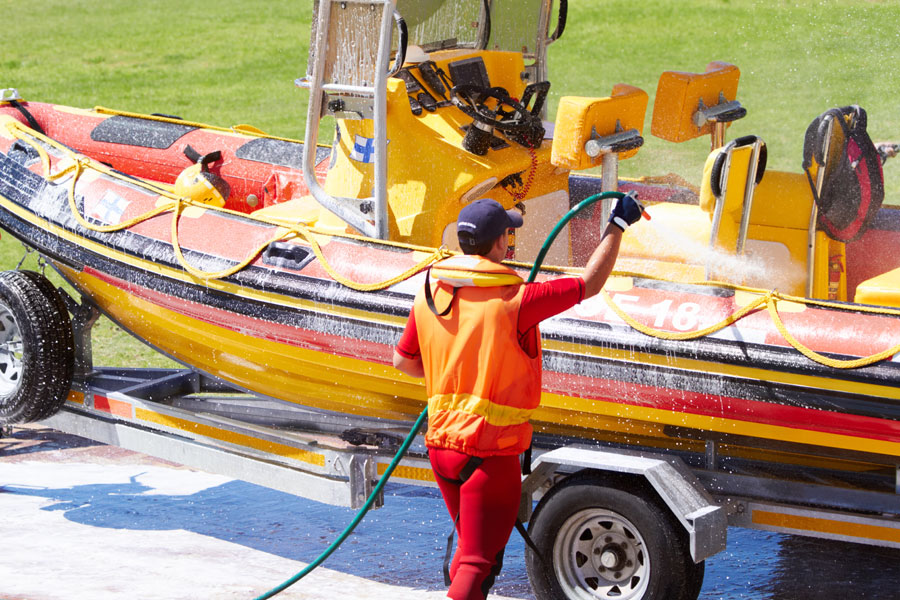
Boaters should:
Aquatic vegetation should never be moved between lakes or waterways.
Fishing lines, anchors, nets, and waders can transport fragments and should be inspected carefully.
Many states operate boat launch inspection and decontamination programs to reduce invasive species spread.
Early detection greatly improves the likelihood of successful containment or eradication.
Management responsibility varies by jurisdiction and waterbody ownership.
In the United States, Eurasian watermilfoil management commonly involves cooperation among:
In New York State, for example, organizations such as the New York State Department of Environmental Conservation, local lake associations, county soil and water conservation districts, and the Adirondack Park Invasive Plant Program all participate in invasive species monitoring and management efforts. Federal agencies including the U.S. Army Corps of Engineers, U.S. Fish and Wildlife Service, and Environmental Protection Agency may also support research, monitoring, or management programs. Citizen science programs increasingly play a major role in tracking invasive aquatic species. Volunteers often assist with lake monitoring, boat inspections, and early detection surveys.
Eurasian watermilfoil demonstrates how quickly invasive species can alter freshwater ecosystems when introduced into new environments. Once established, management becomes costly and perpetual. Prevention, public education, rapid response, and coordinated watershed management are therefore essential. Public awareness campaigns encouraging boat cleaning and invasive species reporting have become some of the most important tools in slowing the spread of Eurasian watermilfoil. Protecting lakes and waterways requires cooperation among recreational users, municipalities, conservation organizations, scientists, and the public. Without continued vigilance, invasive aquatic plants like Eurasian watermilfoil will continue spreading into previously unaffected waterbodies and creating long-term ecological and economic challenges throughout North America.