

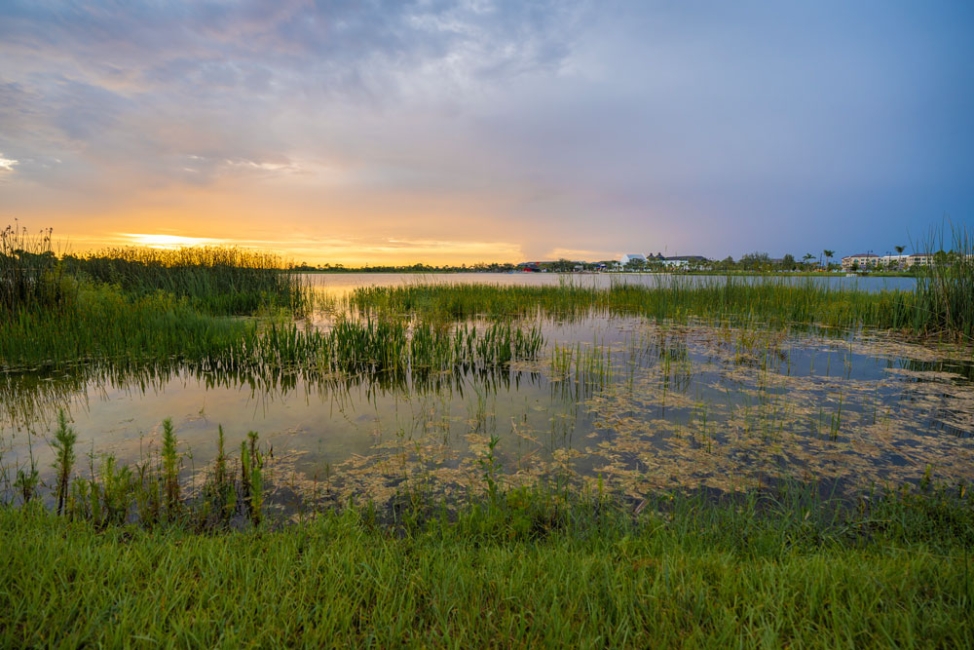
Constructed wetlands are engineered systems that mimic the natural processes of a real wetland in order to treat stormwater, wastewater, or other polluted runoff. They are intentionally designed and built rather than formed through natural hydrology, but they function in much the same way. Water flows slowly through a shallow, vegetated area where soil, plants, and beneficial microbes work together to remove pollutants. As the water moves through the system, sediment settles, nutrients are taken up by plants, and organic matter is broken down by microorganisms living in the root zone.
These systems can take several forms, including surface flow wetlands that look similar to natural marshes and subsurface flow wetlands where water moves through gravel or soil beneath the surface. The choice of design depends on the water being treated, the available land area, and the desired maintenance level. Surface flow designs are often used for stormwater because they provide open habitat space and allow easy inspection. Subsurface designs are common for wastewater polishing where odor control and human contact need to be more carefully managed.
Constructed wetlands are popular because they offer a low energy, low maintenance way to improve water quality. They can remove sediment, nitrogen, phosphorus, metals, and even some pathogens. Their performance improves as vegetation becomes established, and they can continue to function effectively for many years. They also provide wildlife habitat, improve aesthetics, and help control peak flows by slowing water during storms.
Communities use constructed wetlands for stormwater treatment, for polishing effluent from small wastewater plants, for reducing nutrient loads to sensitive water bodies, and for restoring degraded landscapes. While they require planning and periodic maintenance, they are one of the most natural and visually pleasing ways to manage and treat polluted runoff.
Several well known constructed wetlands have become popular examples of how engineered natural systems can clean water while also creating valuable public spaces. These projects are often highlighted because they blend treatment, ecology, and community benefits in a way that traditional stormwater infrastructure does not.
One of the most frequently cited examples is the Arcata Marsh and Wildlife Sanctuary in Arcata, California. The site combines a municipal wastewater treatment system with a large network of constructed wetlands, ponds, and restored marshes. The wetlands polish the town’s wastewater before it reaches Humboldt Bay, and the entire area has become a major birding destination. It shows how a functional treatment system can double as a nature preserve and educational resource.
Another well known example is the Calleguas Creek constructed treatment wetlands in southern California. These wetlands were developed to reduce nutrient and sediment loads before water reaches the creek, and they have become a model for using natural processes in urbanized watersheds with water quality challenges.
Singapore’s Bishan Ang Mo Kio Park is also widely recognized. Although it is primarily known for its river naturalization work, the project includes constructed wetland zones that help filter stormwater before it enters the restored river channel. The park demonstrates how stormwater treatment can be integrated directly into a dense urban landscape while improving recreation and flood resilience.
In Florida, the Orlando Easterly Wetlands are a large scale example built to treat reclaimed water from the city’s wastewater system. The wetlands remove nutrients and improve water quality before discharge, and the site now supports a diverse range of wildlife. It is one of the largest municipal constructed wetlands in the United States.
The Houghton Lake wetland treatment project in Michigan is another regional example that often appears in case studies. It treats stormwater from agricultural and mixed land uses, and it has been successful at capturing nutrients and reducing downstream pollution.
These sites show that constructed wetlands are not fringe experiments. They are proven technologies used in cities, towns, and conservation areas around the world. Their popularity continues to grow because they improve water quality while also offering habitat, recreation, and educational opportunities that traditional pipe based systems can never provide.