

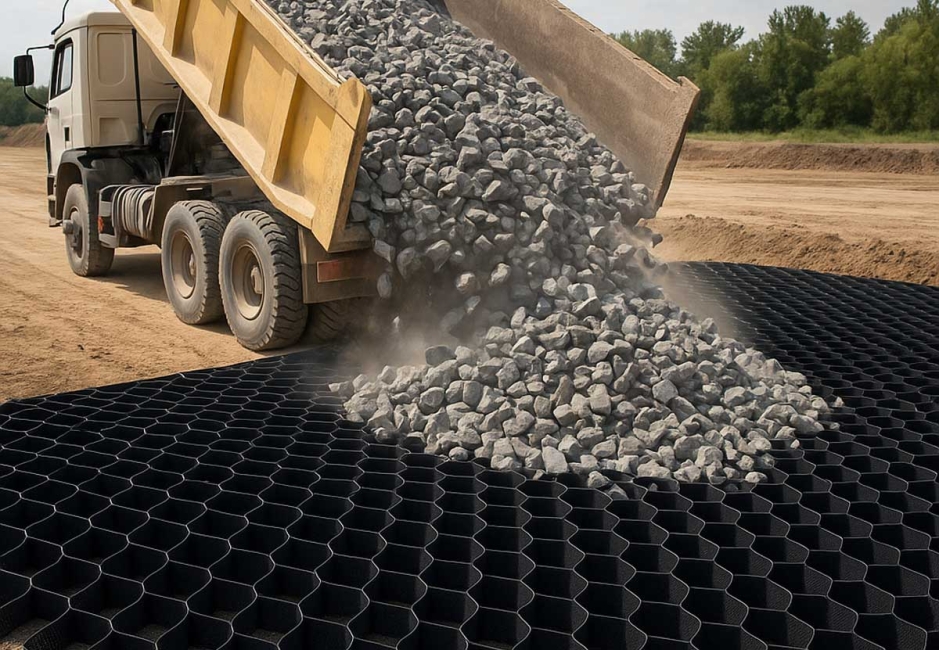
Geocells, also known as cellular confinement systems, have become a trusted solution in the design and maintenance of modern drainage infrastructure. These innovative materials provide structural stability to soils and aggregates, making them particularly useful in applications where erosion control, load distribution, and stormwater management intersect.
Geocells are three-dimensional, honeycomb-like structures made from high-density polyethylene (HDPE) or other durable polymers. When expanded and filled with soil, gravel, or concrete, they create a composite system that resists movement, distributes loads, and reinforces otherwise unstable ground.
Erosion Control
On slopes and embankments, flowing water can easily displace unprotected soil. Geocells trap infill material in place, reducing shear stress and keeping the surface intact. This makes them especially effective in areas prone to surface runoff or where vegetation alone is insufficient.
Stormwater Channel Reinforcement
In drainage swales and open stormwater conveyances, geocells provide armoring that prevents the channel bed and sides from eroding during heavy flows. They can be vegetated for a natural appearance or filled with aggregate or concrete for higher-capacity systems.
Subgrade Stabilization for Culverts and Pipes
Poor subgrade conditions can lead to uneven settlement beneath drainage structures like culverts. Geocells improve load distribution, limiting vertical deformation and extending the life of pipe installations and headwalls.
Roadside and Ditch Stabilization
Alongside roadways, geocells are used to line ditches and stabilize shoulders where water tends to undermine pavement. Their flexible confinement reduces rutting and washouts while facilitating drainage through permeable infill.
Infiltration and Green Infrastructure
When filled with clean aggregate, geocells can double as infiltration zones that slow and spread stormwater while allowing it to seep into the ground. This supports low-impact development (LID) practices and green infrastructure goals.
Site Preparation: Grade and compact the area where geocells will be deployed.
Geotextile Layer (optional): Install a geotextile underlayer if needed for filtration or separation.
Geocell Expansion: Expand the geocell panels and anchor them in place using stakes or rebar.
Infill Placement: Fill the cells with soil, gravel, or concrete depending on the application.
Compaction and Finish: Compact the fill material and, if desired, plant vegetation or install erosion matting.
Drainage ditches near roads and highways
Embankments around stormwater detention ponds
Culvert inlet and outlet protection
Channel linings in flood-prone areas
Retention or infiltration systems in public parks
Permitting: Confirm that the use of geocells aligns with local stormwater design standards and environmental regulations.
Hydraulic Performance: Ensure design engineers account for flow velocity, expected runoff volume, and slope stability.
Maintenance: Periodic inspection and vegetation control may be needed, especially in vegetated geocell systems.
Cost Efficiency: Though initially more expensive than some erosion control blankets, geocells offer long-term savings by reducing repair frequency.
Geocells are a powerful addition to a municipality’s drainage toolbox. Their versatility, structural performance, and environmental compatibility make them ideal for areas where water and gravity work against long-term infrastructure integrity. Whether reinforcing a roadside swale or preventing slope erosion near a culvert, geocells help drainage systems perform better, and last longer.