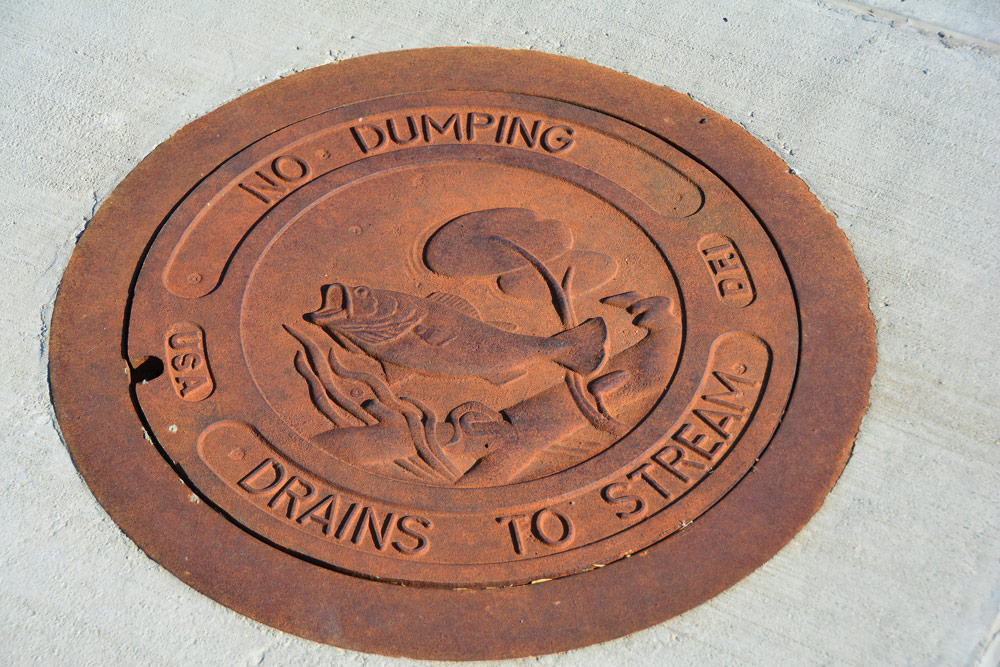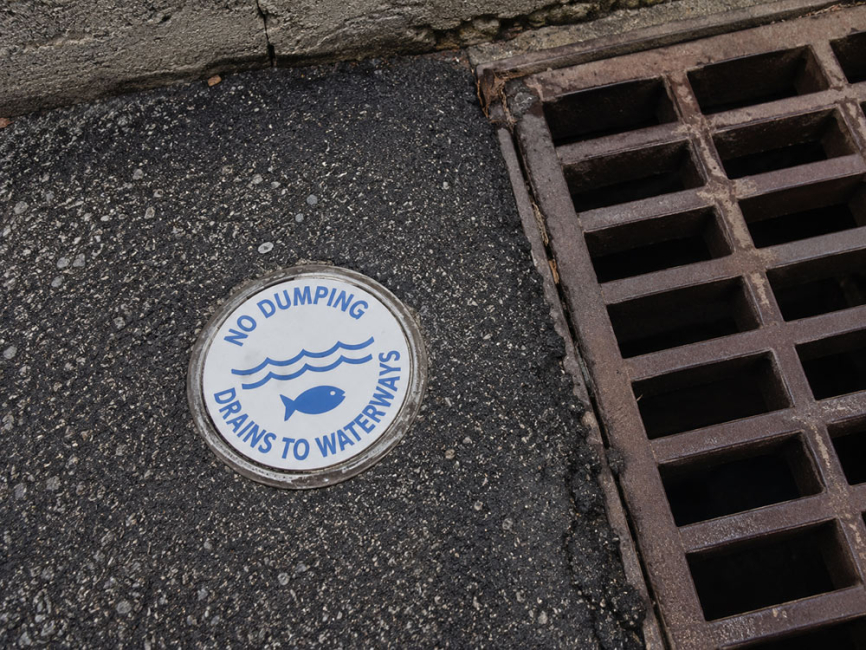
Most storm drain inlets quietly collect and convey runoff without attracting much attention from the public. To many residents, a storm drain is simply another opening in the curb or grate in the pavement. What many people do not realize, however, is that storm drains in most municipalities discharge directly into nearby streams, rivers, lakes, ponds, wetlands, and other waterways, often with little or no treatment.
Because of this direct connection to natural water resources, municipalities should strongly consider labeling storm drain inlets with clear environmental warnings such as “No Dumping – Drains to Waterways,” “Only Rain Down the Drain,” or similar messaging. Although storm drain labeling may seem like a small public outreach effort, it can play an important role in reducing pollution, improving public awareness, supporting regulatory compliance, and protecting local ecosystems.
A surprising number of residents assume that water entering a storm drain is sent to a wastewater treatment plant in the same manner as sewage from sinks and toilets. In reality, storm sewer systems and sanitary sewer systems are usually completely separate infrastructure systems.
Stormwater runoff entering a municipal separate storm sewer system (MS4) is commonly discharged directly into nearby receiving waters. This means that anything dumped into a storm drain may ultimately end up in a creek, river, lake, estuary, or wetland.
Common pollutants improperly introduced into storm drains include:
Even relatively small amounts of these materials can contribute to water quality degradation, aquatic habitat damage, algae blooms, fish kills, and long-term environmental contamination.
Unlike brochures, social media campaigns, or occasional public service announcements, storm drain markers provide constant, visible reminders directly at the point where pollution can occur. A resident washing paint brushes near a curb inlet may reconsider dumping rinse water after seeing a clearly visible warning stating that the drain leads directly to local waterways. Similarly, children, contractors, landscapers, and visitors may become more aware of stormwater pollution simply by encountering these markings throughout a community. Storm drain labeling works particularly well because the message is immediate, location-specific, and easy to understand. Over time, widespread labeling throughout a municipality can help create greater public awareness of how stormwater systems function and why protecting waterways matters.
Many municipalities regulated under National Pollutant Discharge Elimination System (NPDES) MS4 permits are required to implement public education and public involvement programs related to stormwater pollution prevention. Storm drain labeling initiatives can support these requirements by serving as a practical and visible component of a broader public outreach strategy. In many cases, storm drain marking programs are categorized under public education, public participation, illicit discharge awareness, or pollution prevention outreach efforts. Some municipalities even involve volunteers, schools, scout groups, environmental organizations, or community groups in storm drain marking campaigns. These programs can increase public engagement while reducing municipal labor costs.
Illicit discharges into storm sewer systems remain a major challenge for many municipalities. While some discharges are intentional, many occur because residents simply do not understand the environmental consequences. Visible storm drain warnings can discourage improper dumping and reinforce the idea that storm drains are part of a sensitive environmental system rather than a disposal method. Although labels alone will not eliminate illicit discharges, they can contribute to behavioral changes that reduce pollutant loading over time.
Storm drain labeling can also help reinforce a municipality’s commitment to environmental protection and water quality management.
Residents who see clearly marked drains may become more conscious of their own activities, including:
These small behavioral changes can collectively produce measurable improvements in stormwater quality.
Some municipalities have gone a step further by installing custom storm drain markers that specifically identify the receiving waterbody connected to the storm sewer system. Messages such as “Drains to Lake George,” “Drains to Monterey Bay,” or “Drains to Trout Brook” can create a much stronger connection between local actions and environmental consequences. Residents may be far less likely to dump pollutants into a storm drain when they realize the discharge ultimately reaches a nearby lake, stream, river, or coastal waterbody they personally value or use for recreation. Custom markers can also help strengthen community identity and environmental stewardship by reminding the public that local waterways are shared resources worth protecting.
One reason storm drain labeling is not more widespread is cost. Many commercially available storm drain markers consist of cast aluminum or similar metal plaques adhered to pavement or concrete surfaces near the inlet. These products can look professional and may provide long-term durability under ideal conditions. However, they can become expensive when applied across an entire municipality with hundreds or thousands of storm drains.
In addition to material costs, municipalities must consider labor, surface preparation, adhesive performance, and long-term maintenance. Metal markers may also be vulnerable to damage or removal from snow plow blades, street sweeping operations, pavement deterioration, or vandalism. In colder climates with aggressive winter maintenance operations, some municipalities may find that adhered markers do not remain intact as long as expected.
Fortunately, municipalities do not need expensive cast markers to implement an effective storm drain labeling program. A far more affordable approach is to use reusable stencils and pavement marking paint to apply warnings directly onto nearby asphalt or concrete surfaces. Messages such as “No Dumping,” “Drains to Waterways,” or “Only Rain Down the Drain” can often be painted quickly and inexpensively by municipal crews.
Stencil-based marking programs offer several advantages:
For municipalities with limited budgets, this approach may make widespread storm drain labeling financially realistic. Painted markings may require periodic repainting, especially in areas with heavy traffic or snow removal activity, but the low cost and simplicity often outweigh the maintenance requirements.
Storm drain labeling is not a complex infrastructure project, but it can produce meaningful environmental benefits over time. Even simple warning messages can help residents understand that storm drains connect directly to local waterways and that dumping pollutants into them can harm the environment. Whether implemented through decorative metal plaques or simple painted stencil markings, storm drain inlet labeling represents a practical, visible, and relatively inexpensive stormwater management strategy. For municipalities seeking cost-effective ways to improve public awareness, support MS4 compliance efforts, and reduce pollution entering local waterways, labeling storm drains is a straightforward step worth considering.